Precast Concrete Retaining Walls That Actually Hold Up
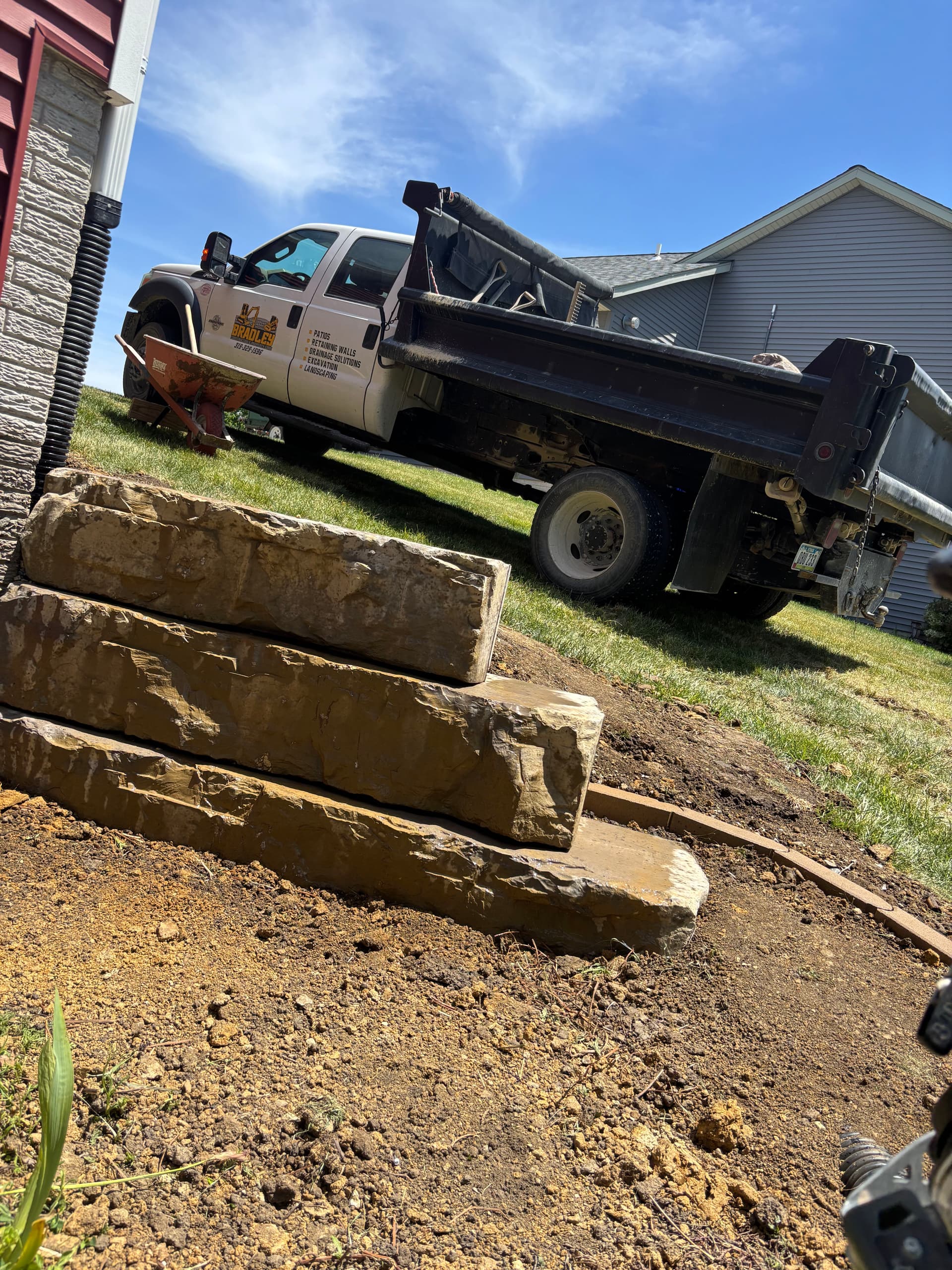
When a slope or grade change starts working against your property, a retaining wall is usually the right answer. The question is what kind. A lot of homeowners default to whatever looks cheapest up front - and end up dealing with shifting, cracking, or leaning blocks within a few years.
Precast concrete is different. It's poured and cured under controlled conditions, which means you're starting with a much denser, stronger block than most alternatives. The texture gives it that natural stone look without the unpredictability that comes with working with actual fieldstone. You get the best of both - durability and clean aesthetics.
The stacked courses you see here are tight and level. That's not an accident. Proper base prep and grading before the first block ever goes down is what separates a wall that lasts from one that fails. We handle the site prep and excavation side of this work ourselves, so there's no guessing about whether the ground underneath is ready.
What we end up with is a wall that holds the grade, keeps erosion in check, and actually looks like it belongs on the property. It structures the yard without screaming "we had a problem here." That matters when you're trying to maintain curb appeal and property value at the same time.
If you've got a slope, a raised bed, or a grade change that needs to be dealt with properly - precast concrete is worth a serious look. It's one of those solutions that just makes sense long-term.