Retaining Wall Rebuild and Paver Patio in Cedar Rapids
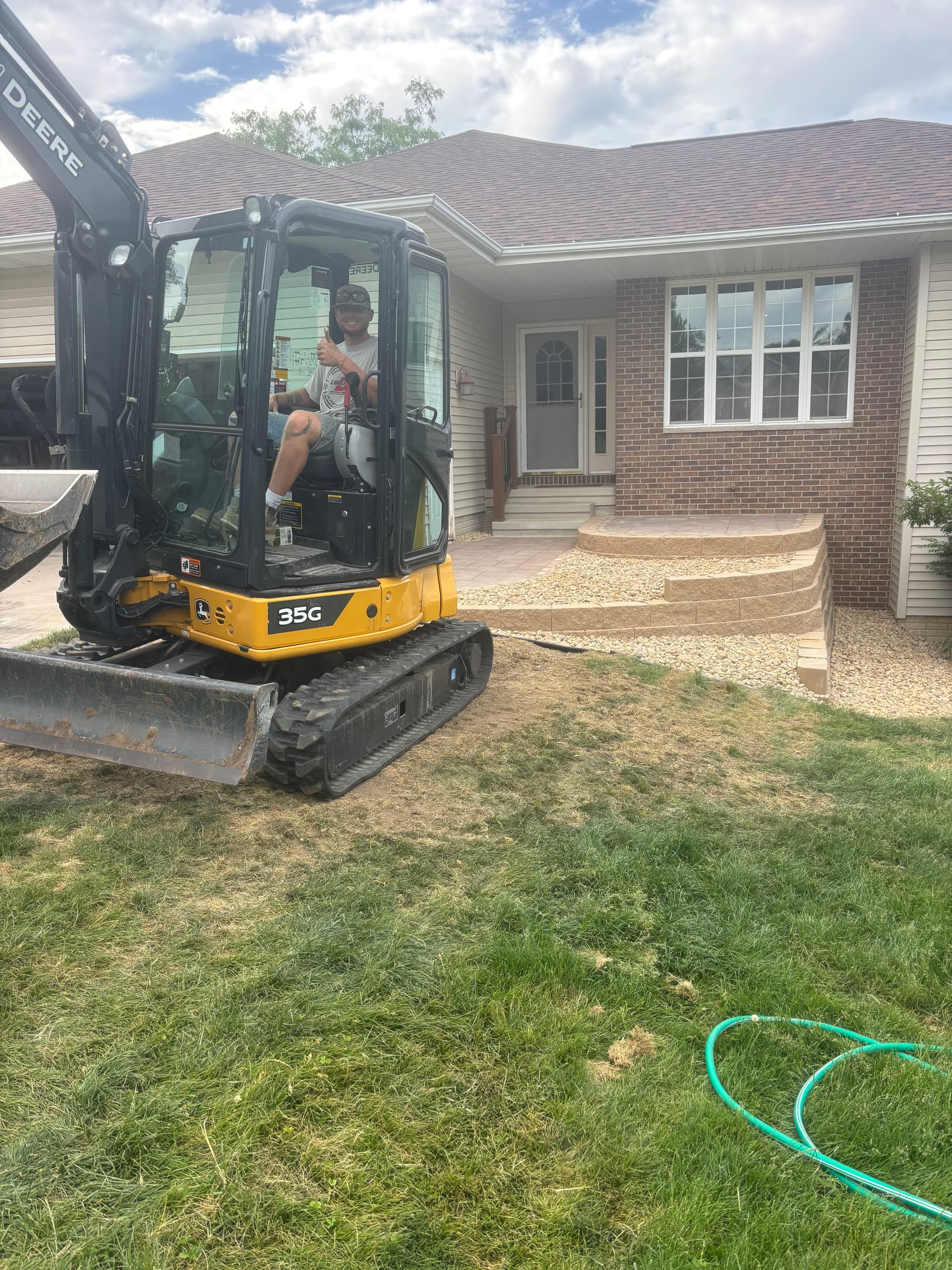
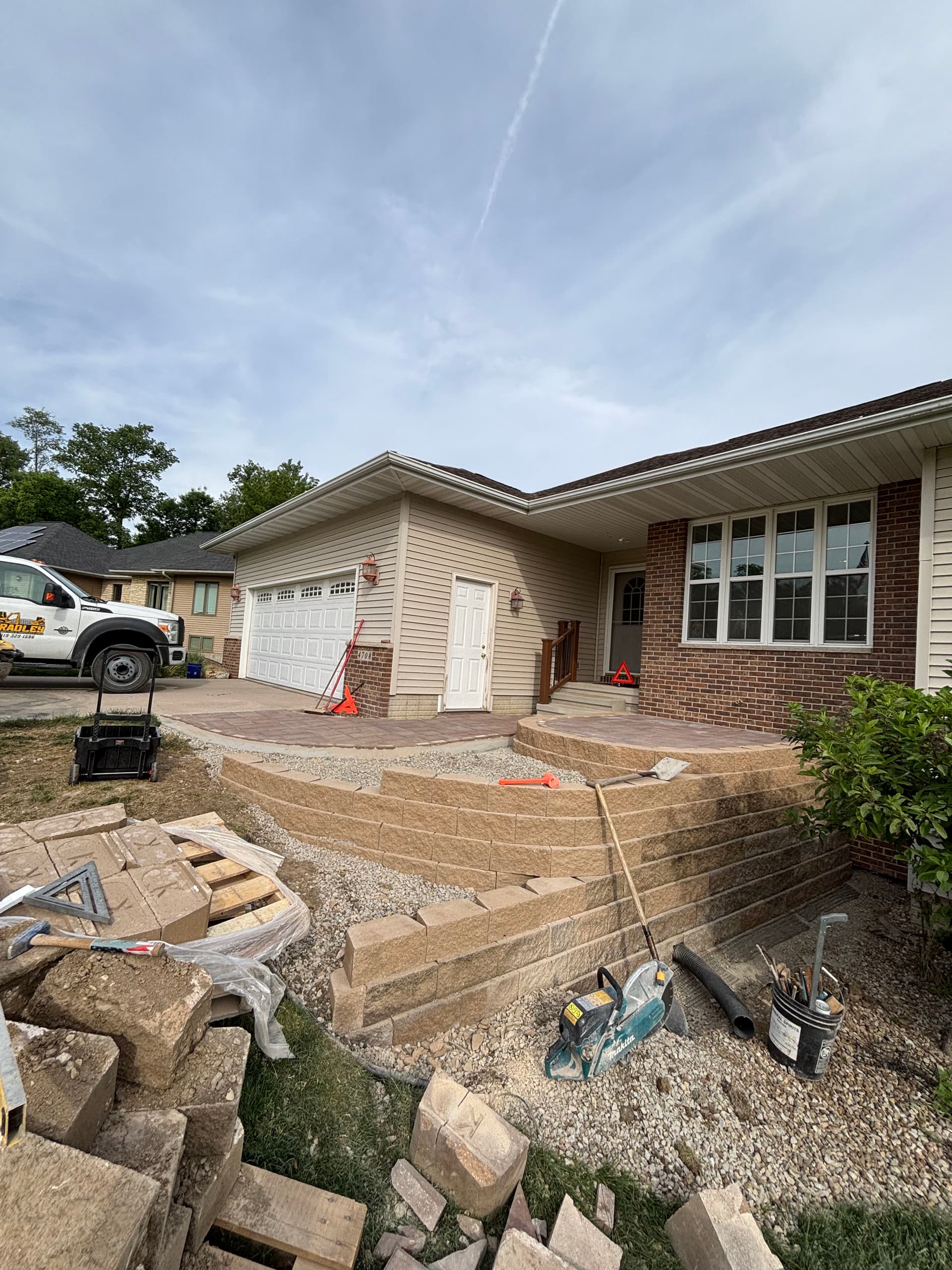
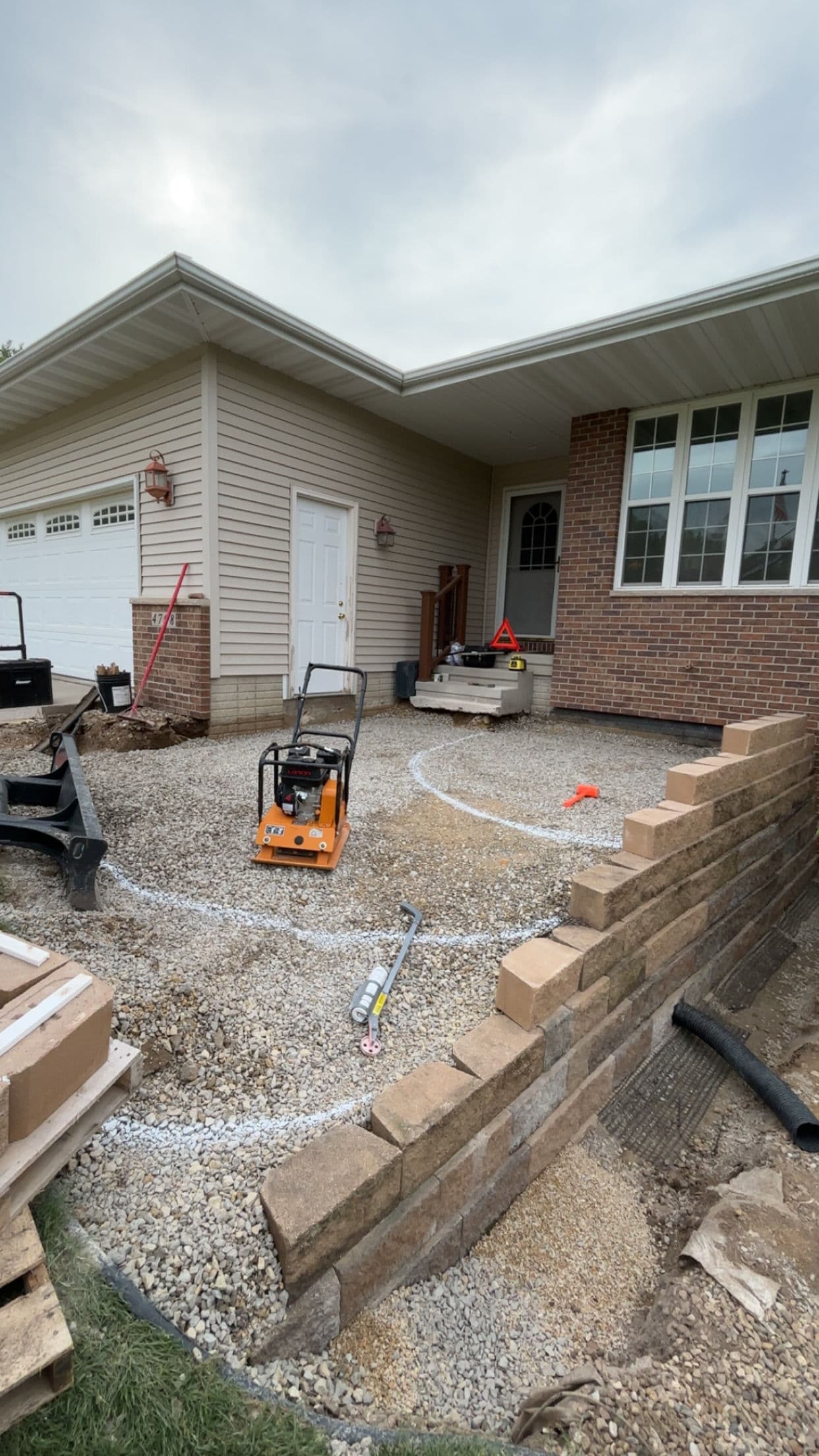
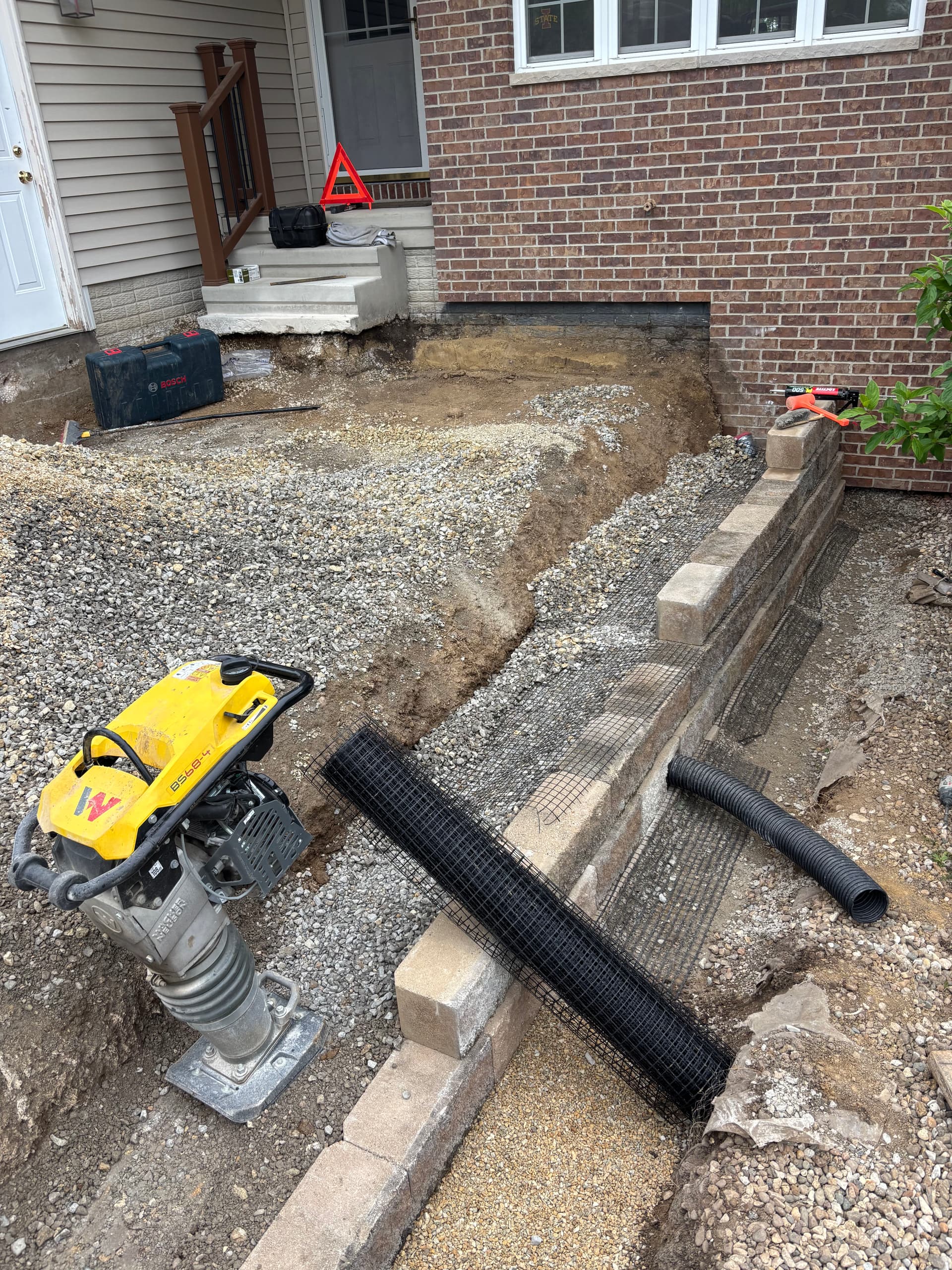
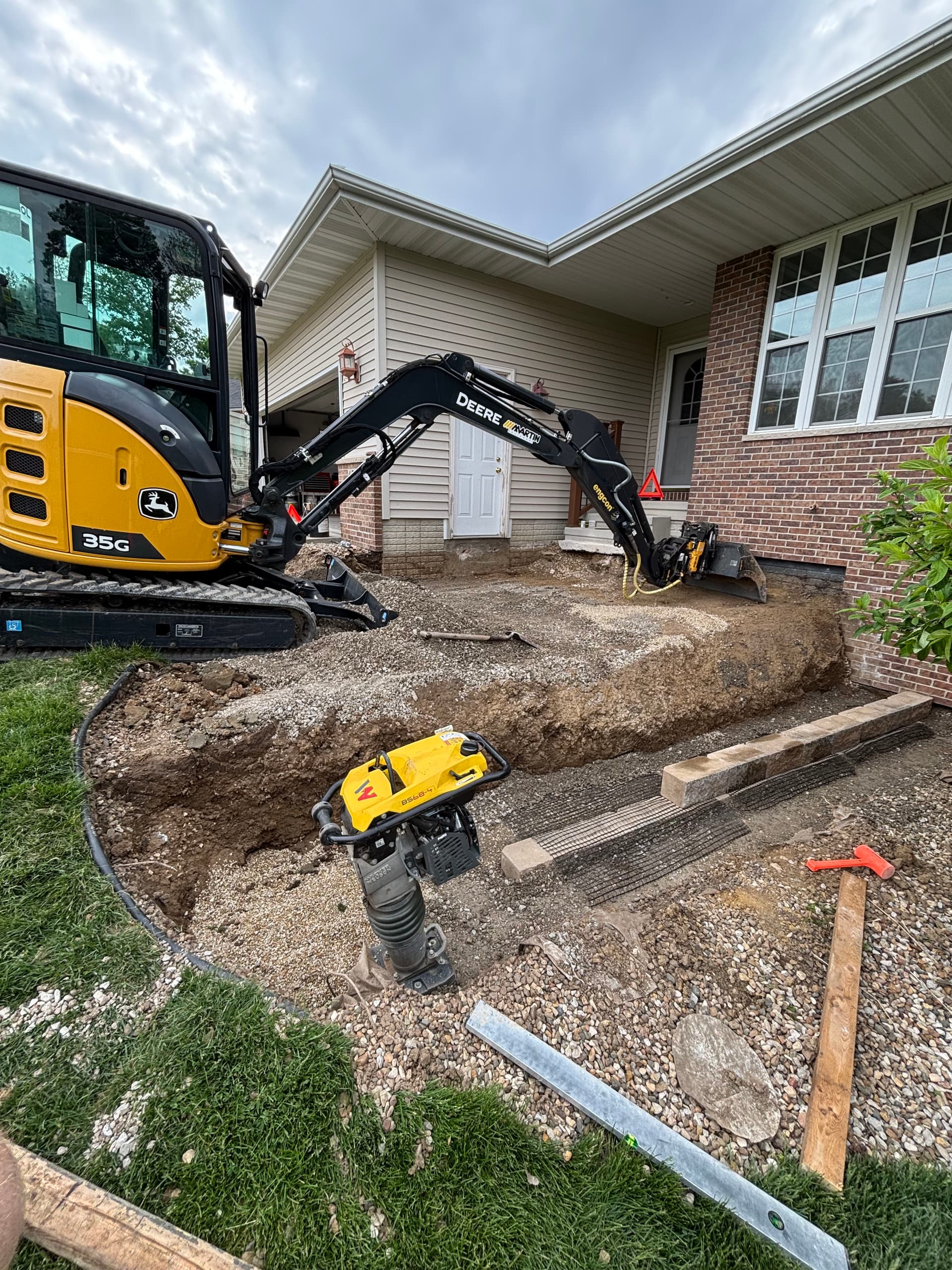
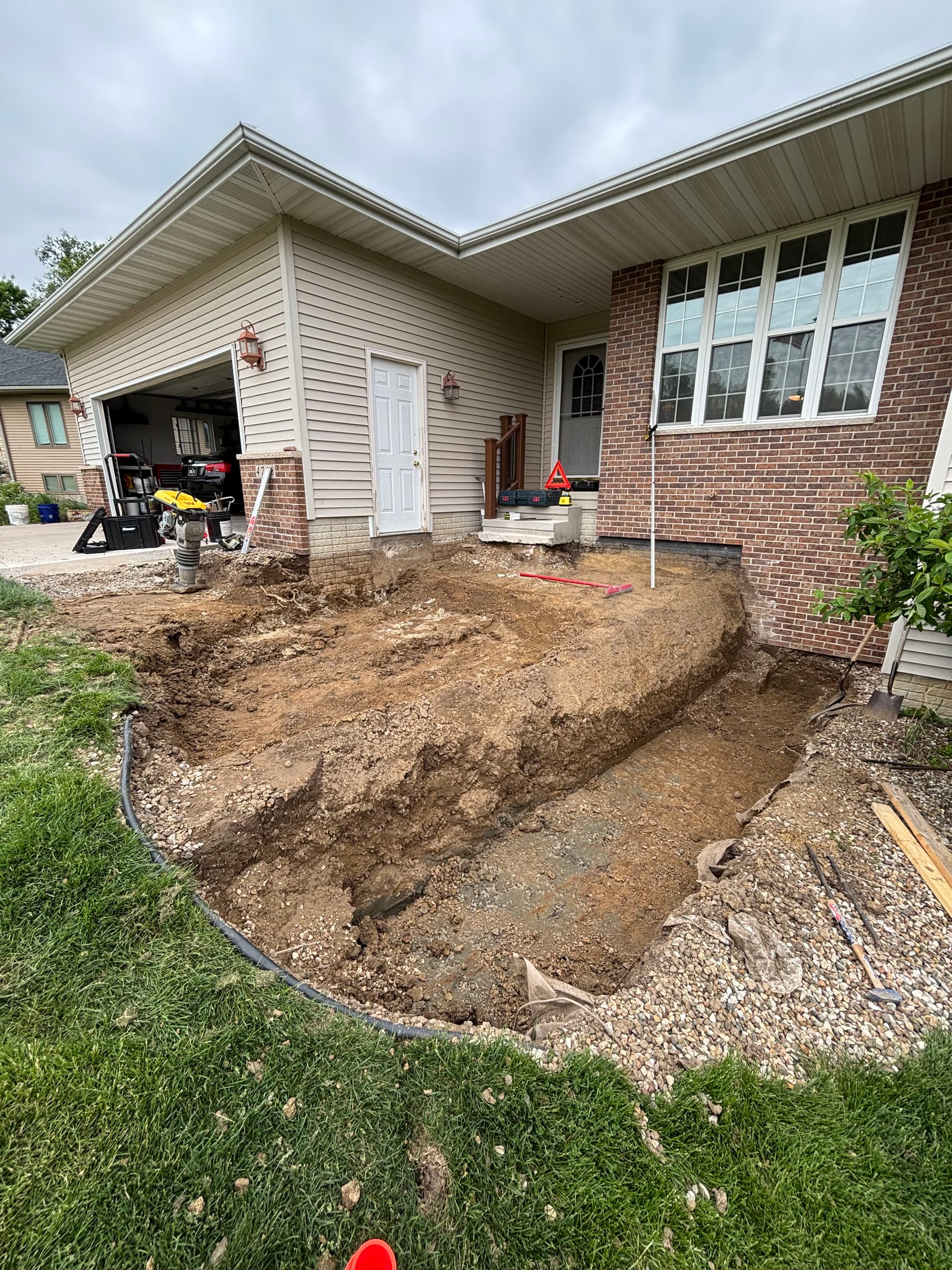
This one started from scratch. We excavated the entire front yard area down to bare dirt, pulled everything out, and built a proper base before a single block went in. That's the part most people never see - but it's the part that determines whether the finished product holds up for years or starts shifting and cracking within a few seasons.
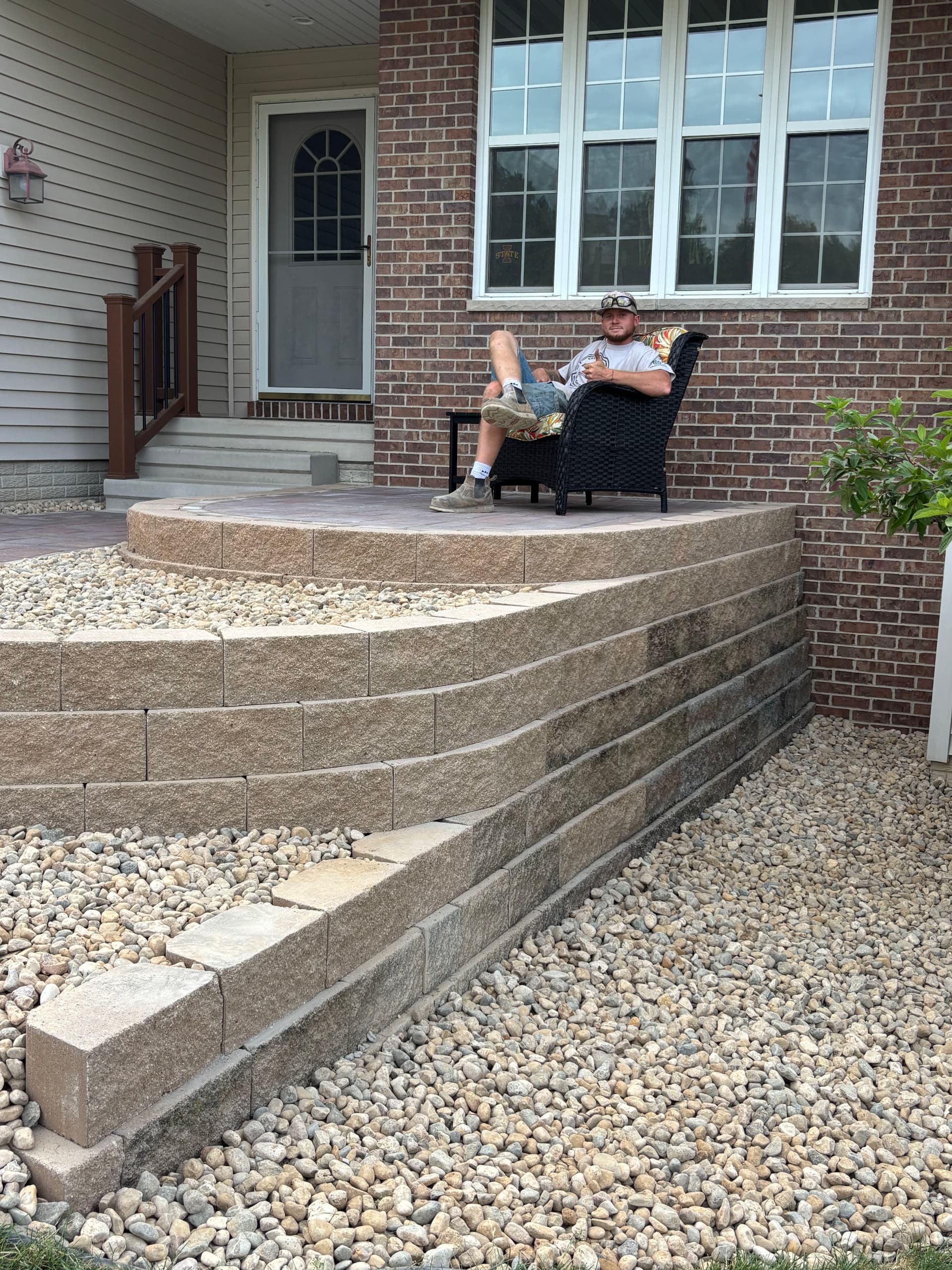
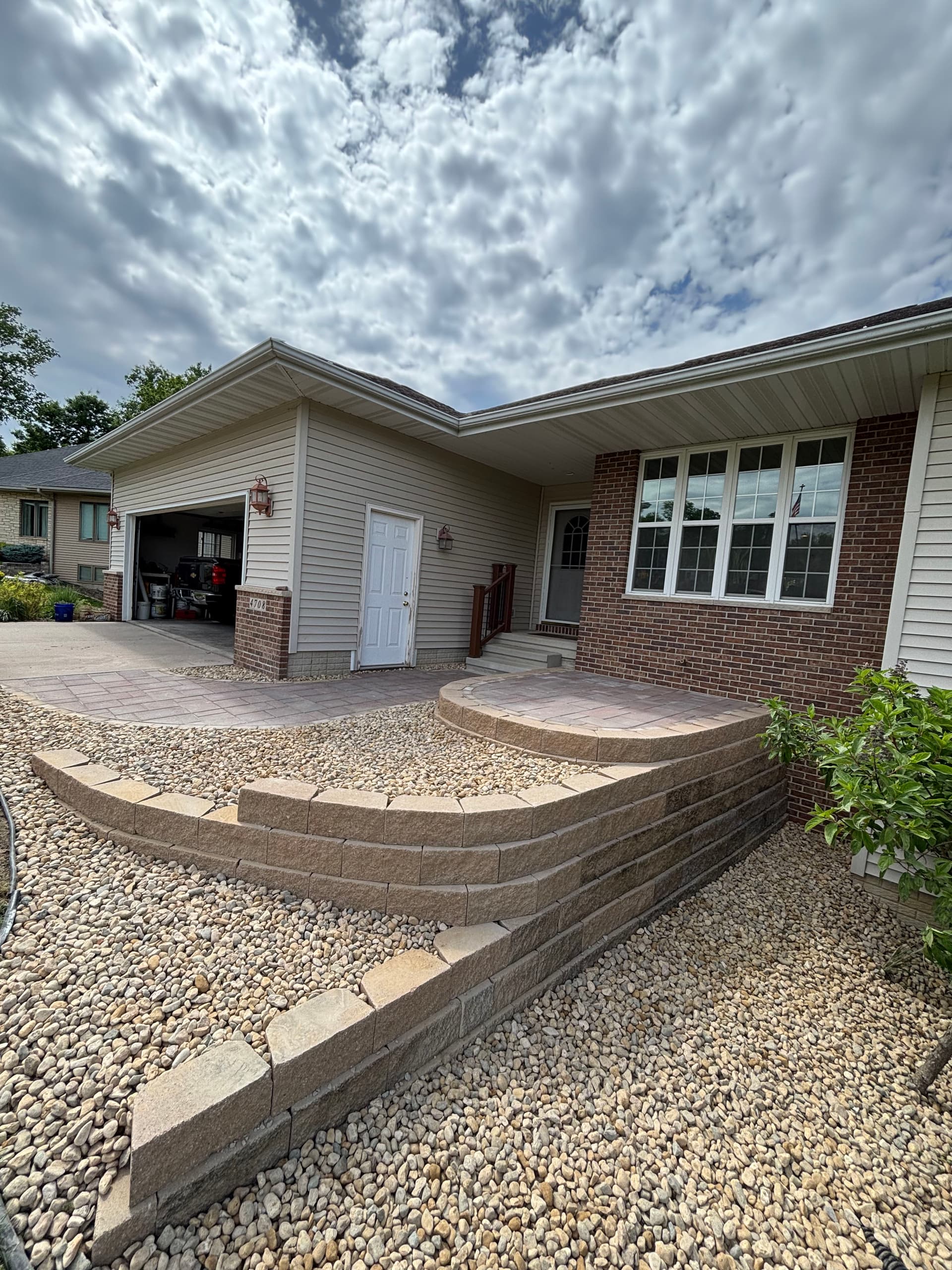
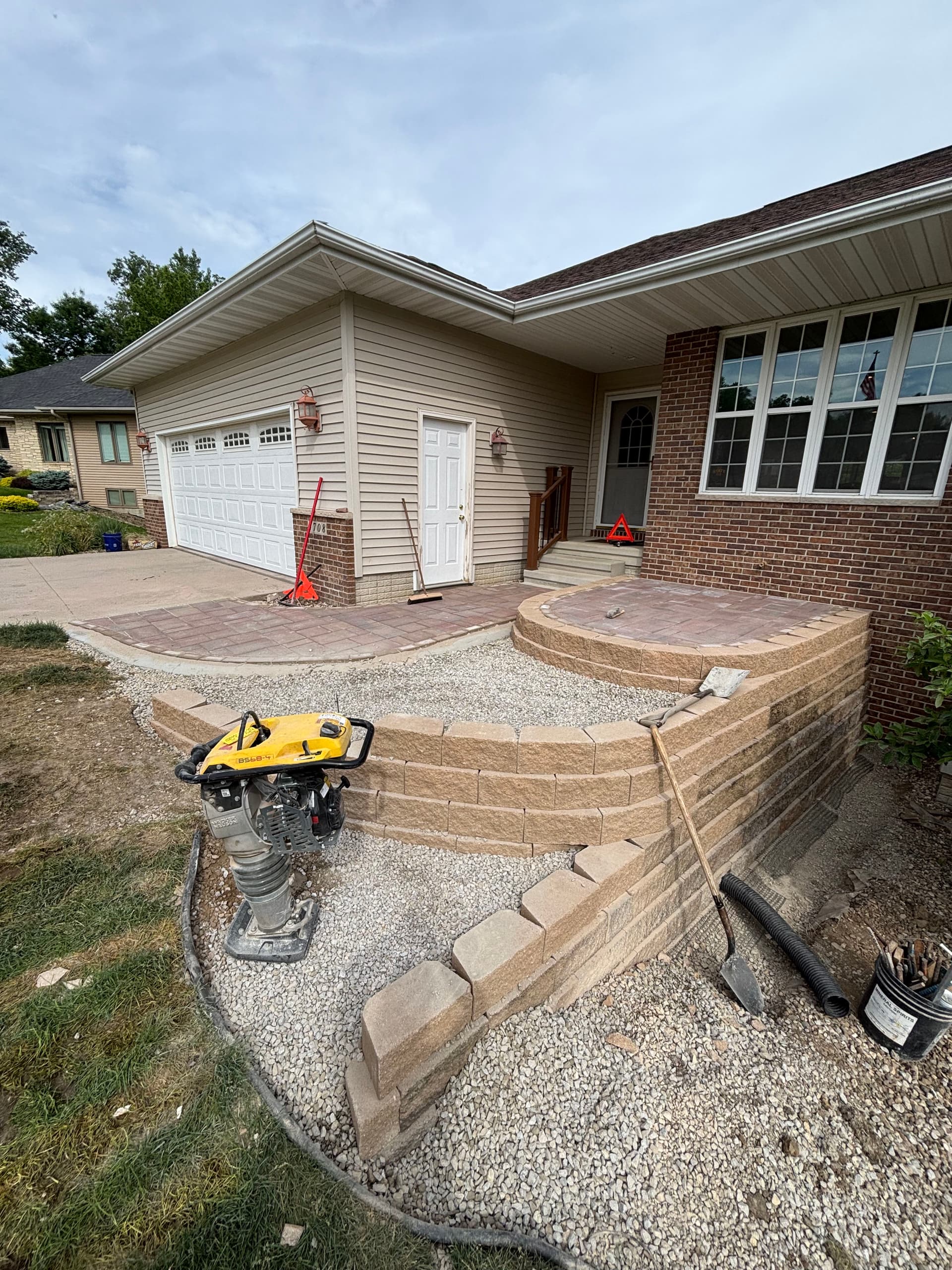
The wall itself is a curved, tiered block retaining wall wrapping around the front of the house. Getting that curve right takes patience. Each course has to be set carefully so the whole thing stays tight and consistent as it steps up. We also laid geogrid reinforcement and drainage pipe behind the wall to handle water movement - because a wall with no drainage plan is a wall that's eventually going to fail.
Once the wall was set, we moved into the patio. The layout was marked out on the compacted gravel base before any pavers went down. That planning step matters more than most people realize - it's how you avoid awkward cuts and uneven patterns at the edges. Plate compactors were used throughout the base work to make sure everything was solid before the pavers were placed.
The finished space connects the front door area to the garage-side walkway with a clean, wide paver surface. The tiered wall drops down to the rock-mulched yard in a way that looks intentional and put-together. It's a big upgrade from a functional standpoint too - better access, better drainage management, and a front entry that actually makes sense for how people move around the property.
Solid prep and quality materials aren't just talking points. They're what separates hardscape that looks good on day one from hardscape that still looks good years down the road. That's what we're focused on every time we pull equipment onto a job site.